
Commercial scope and public price floors
Review current package timelines, starting prices, normal inclusions, exclusions, and scope factors before requesting a proposal.
LongTermSoftware.com
Review pricing boundaries, public evidence, standards alignment, privacy posture, machine-readable due-diligence files, and the normal buying sequence for LongTermSoftware engagements.
Buyer due diligence
This page organizes the public material a technical buyer, executive sponsor, procurement reviewer, or automated vendor-evaluation tool can inspect without requesting private client evidence.
Review current package timelines, starting prices, normal inclusions, exclusions, and scope factors before requesting a proposal.
Inspect public-safe case context, controls, artifacts, measurement status, and explicit boundaries between method proof and approved outcomes.
Trace public claims to proof routes, evidence types, maturity status, and confidentiality boundaries without treating templates as client results.
Review how implementation controls map to familiar governance language without implying certification, legal advice, or guaranteed compliance.
Use llms.txt, the AI agent manifest, route QA contract, and proof-ledger exports for automated or technical due diligence.
Confirm what belongs in a public form, what requires a private handling path, and what the public site does not collect or execute.
Normal buying sequence
The exact contracting process depends on the buyer. This sequence explains the normal control points without promising an SLA or a completed security review.
Confirm the business problem, technical owner, likely package, and whether a paid assessment is justified.
Review system type, risk, timeline, stakeholders, data sensitivity, and evidence needs without requesting private code in a public form.
When detailed evidence is required, establish the appropriate NDA, client-controlled repository, secure channel, or access boundary before transfer.
Define deliverables, responsibilities, exclusions, acceptance criteria, pricing, timeline, and the exact evidence required for completion.
Begin only after owners, access, review cadence, decision authority, and handling boundaries are named.
Evidence status before procurement
This prevents a static build check from being mistaken for a security attestation, accessibility certification, search result, or client outcome.
Available in the release archive
Syntax, version alignment, public pricing, asset integrity, schema parseability, sitemap inventory, dependency boundaries, and root-package integrity are checked before ZIP creation.
Requires deployment
Status codes, redirects, rendered metadata, response headers, form output, utility routes, static-root parity, and production link behavior require a deployed canonical domain.
Requires external systems
Search Console indexing, actual query data, PageSpeed and CrUX field data, SMTP delivery, CDN behavior, security headers, and assistive-technology findings cannot be inferred from a static package.
Requires human-approved source material
Client outcomes, testimonials, logos, screenshots, certifications, partnerships, or named performance results are not published until the exact evidence and wording are approved.
Public and private boundaries
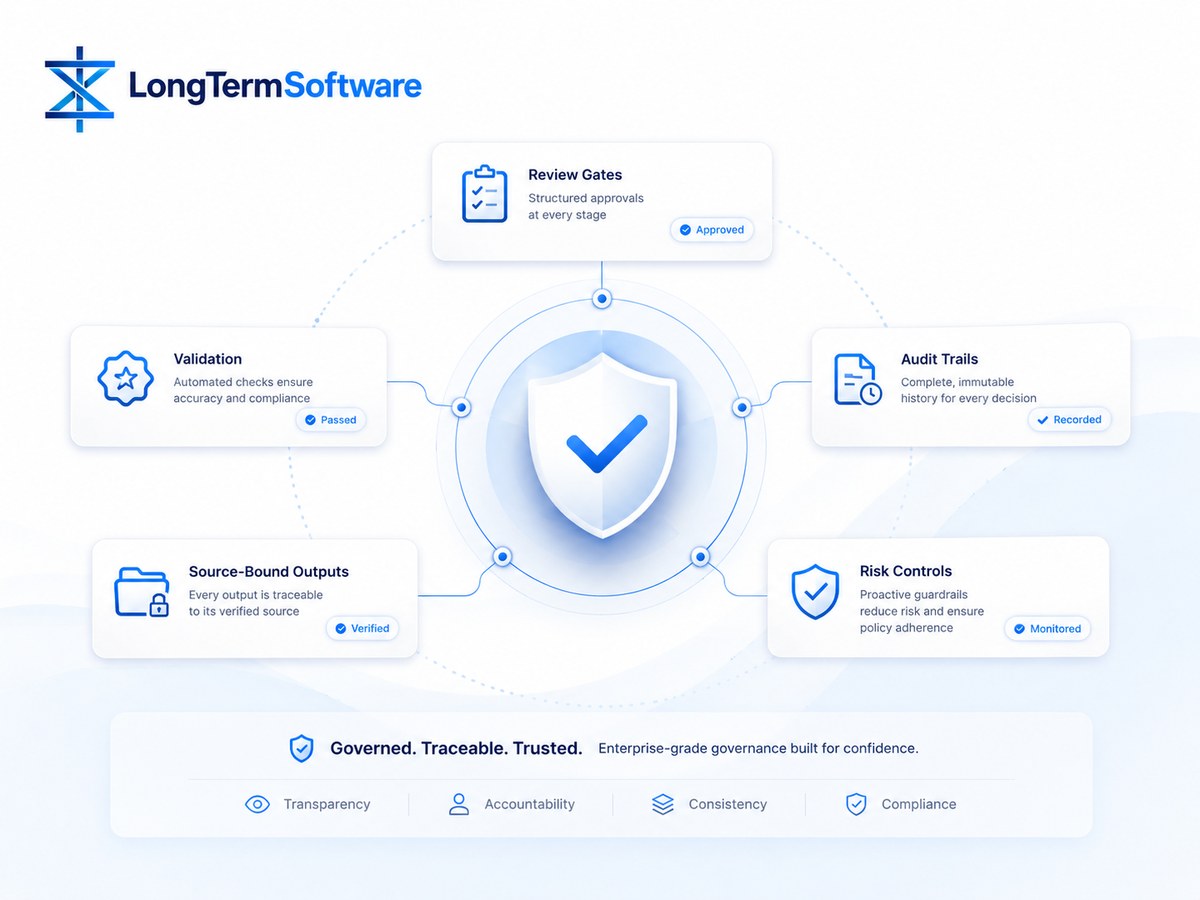
Public pages provide package scope, pricing posture, methods, case narratives, sample artifacts, standards alignment, and machine-readable evidence. They do not expose private code, security configuration, contracts, client records, or unapproved outcome metrics.
Where private review is necessary, the proposal should name the handling path, authorized people, access period, evidence location, deletion or return expectations, and the decision the evidence supports.
No. The published amounts are planning floors or access guidance. A written proposal defines the final scope, responsibilities, exclusions, timeline, and commercial terms.
No. Public standards-alignment material explains implementation controls and review questions. It is not legal advice, a certification, or a guarantee that a buyer meets a regulatory obligation.
Yes, when both parties approve an appropriate private handling path. Public pages remain separate from confidential code, client records, security details, and unapproved outcome evidence.
Review the service ladder, current price floors, case-study boundaries, proof ledger, privacy notes, standards-alignment page, and the relevant checklist or one-pager.
No. Public forms and diagnostics are for high-level routing only. Sensitive evidence requires an approved private channel and explicit handling expectations.
Named client outcomes, testimonials, private architecture, security configuration, contract documents, and client-specific metrics are not published unless the exact material and wording are approved.
Next step
A short fit call can confirm package fit, private-evidence needs, and whether a formal scope review is justified.
Book a procurement fit call